
NIRPN April 2026 Event
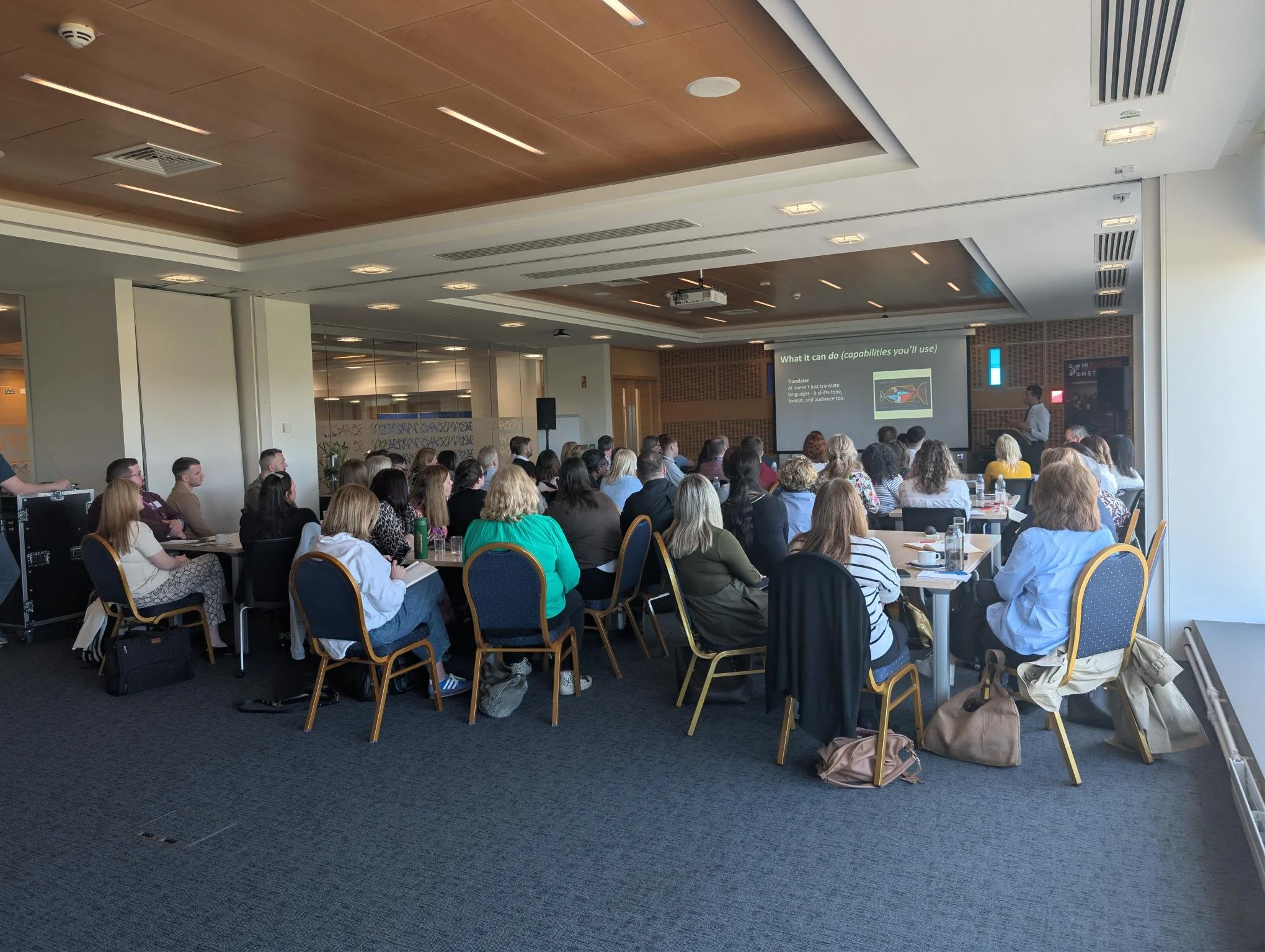
On Friday 24 April, the Northern Ireland Research Professionals Network (NIRPN) welcomed over 60 attendees to Ulster University’s Coleraine Campus for an engaging and thought-provoking event exploring the theme of ‘Practical Exploration of AI in Research Management and Administration.’
The event brought together research professionals from across the sector to discuss the opportunities, challenges and practical applications of AI. Welcoming attendees to the Coleraine Campus, Orlaith Hurley, Head of Research Management at Ulster University and member of the NIRPN Organising Committee, set the scene for the day’s discussions, which focused on building confidence and understanding around the rapidly evolving AI landscape.
The keynote session was delivered by Rupert Lorraine, Approachable AI Consultant & Sector Lead (Creative Economy) at the University of Plymouth. Rupert’s session, ‘Building Capability & Confidence: AI and Emerging Technologies in Research Management and Administration’, provided attendees with an accessible and practical overview.
The session explored a structured journey from making sense of AI, through structuring effective prompts, to real-world applications in research management, with responsible and ethical use woven throughout. Drawing on Anthropic's AI Fluency Index, the session also explored the habits that distinguish effective AI users and the common mistakes that can undermine quality and trust. This was brought to life through extended demonstrations, including a live exercise using a curated workspace of Northern Ireland-specific strategy documents from both Queen's University Belfast and Ulster University.
Throughout the session, Rupert emphasised that while AI is extraordinarily capable, users remain responsible and accountable for outputs. Attendees were encouraged to view themselves as the thought leader and AI as a thought partner, rather than a replacement for professional judgement. He also highlighted the important role individuals play in holding institutional knowledge and managing complexity across organisational boundaries – making the case that these skills become more, not less important as AI accelerates analytical work. He also referenced Research Professional Futures, a Research England-funded programme exploring how research professional roles and career pathways need to evolve.
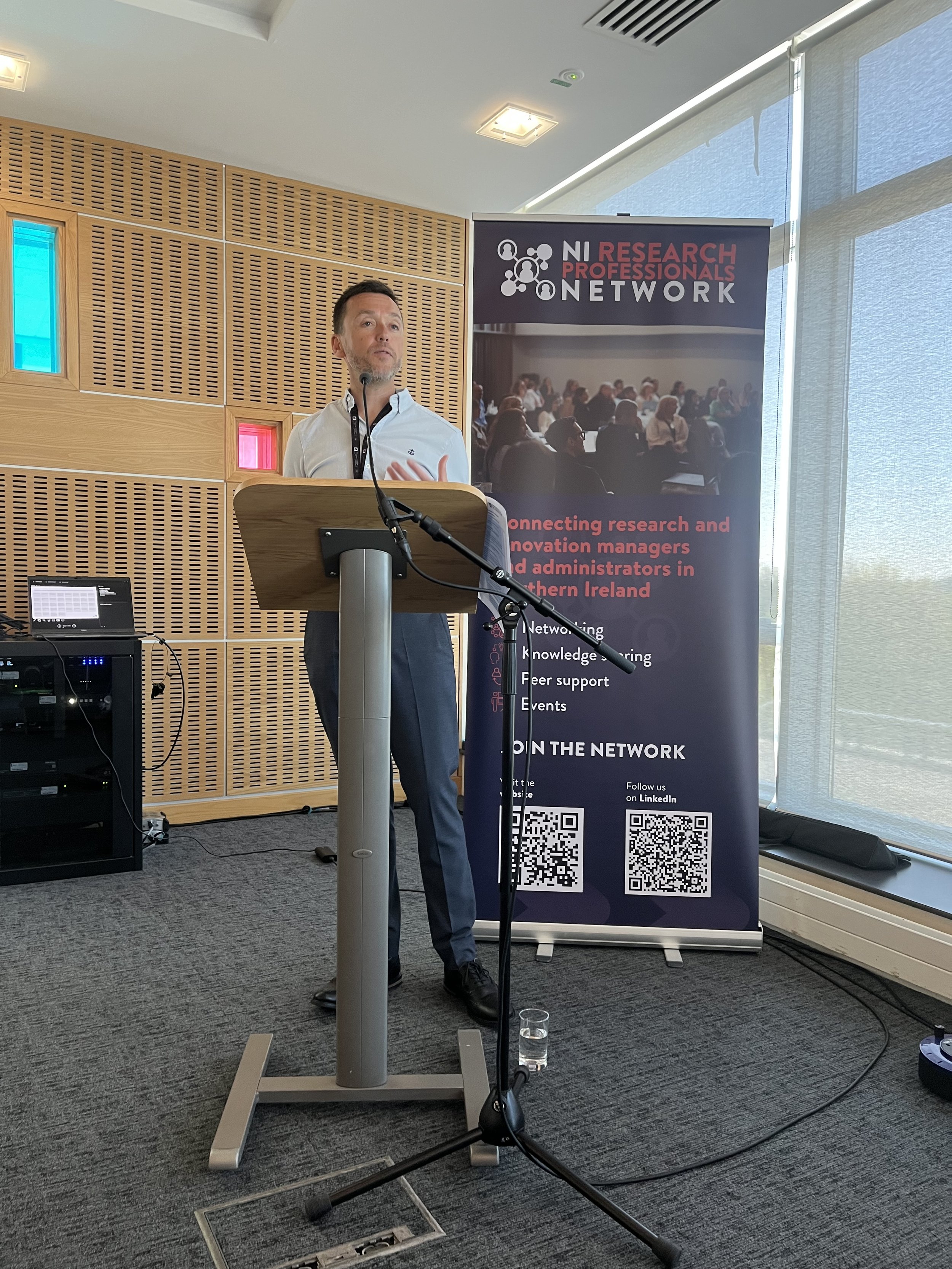

Attendees then heard from Bronagh Lanigan, Principal AI Engineer at the Artificial Intelligence Collaboration Centre (AICC), alongside Karl Lynagh, Senior Contracts Associate at Queen’s University Belfast.
Bronagh shared practical guidance around selecting the right AI model for different purposes, understanding the limitations of AI systems, and adopting best practice when using these tools. Echoing themes from the keynote, Bronagh reinforced that while AI is powerful, it is far from perfect, and that responsible and ethical use must remain central to adoption. She also highlighted the significant impact that effective prompting can have on outputs and emphasised the importance of keeping a ‘human in the loop’.
Karl provided attendees with a practical demonstration of Contract Matrix, an AI-supported tool embedded within Microsoft Word and used by the Research Contracts team at Queen’s. The tool acts as an AI assistant to support the review and analysis of contracts and related documentation. Karl discussed both the benefits and efficiencies the team has experienced, as well as some of the challenges encountered through implementation and adoption.
The presentations were followed by roundtable discussions where attendees reflected on the extent to which AI is currently being used within their own roles and institutions, how it is being applied, and the barriers, concerns and opportunities associated with wider implementation.
The subsequent panel Q&A with speakers prompted insightful discussion on a range of topics including tasks participants would be reluctant to delegate to AI, the potential impact on early career professionals where foundational tasks that traditionally help build experience may increasingly be undertaken using AI, discussions around disclosure and expectations relating to the use of AI in grant applications, and wider sustainability considerations.
The event provided a valuable opportunity for research management and administration professionals to openly discuss both the opportunities and complexities presented by AI, while sharing experiences and practical insights from across the sector.
NIRPN looks forward to welcoming members to future events and continuing to facilitate discussion and knowledge exchange across the research management and administration community.